Factory Precision Matters: The Real Difference Behind OEM Engineering
Why Nissan Genuine Parts Matter
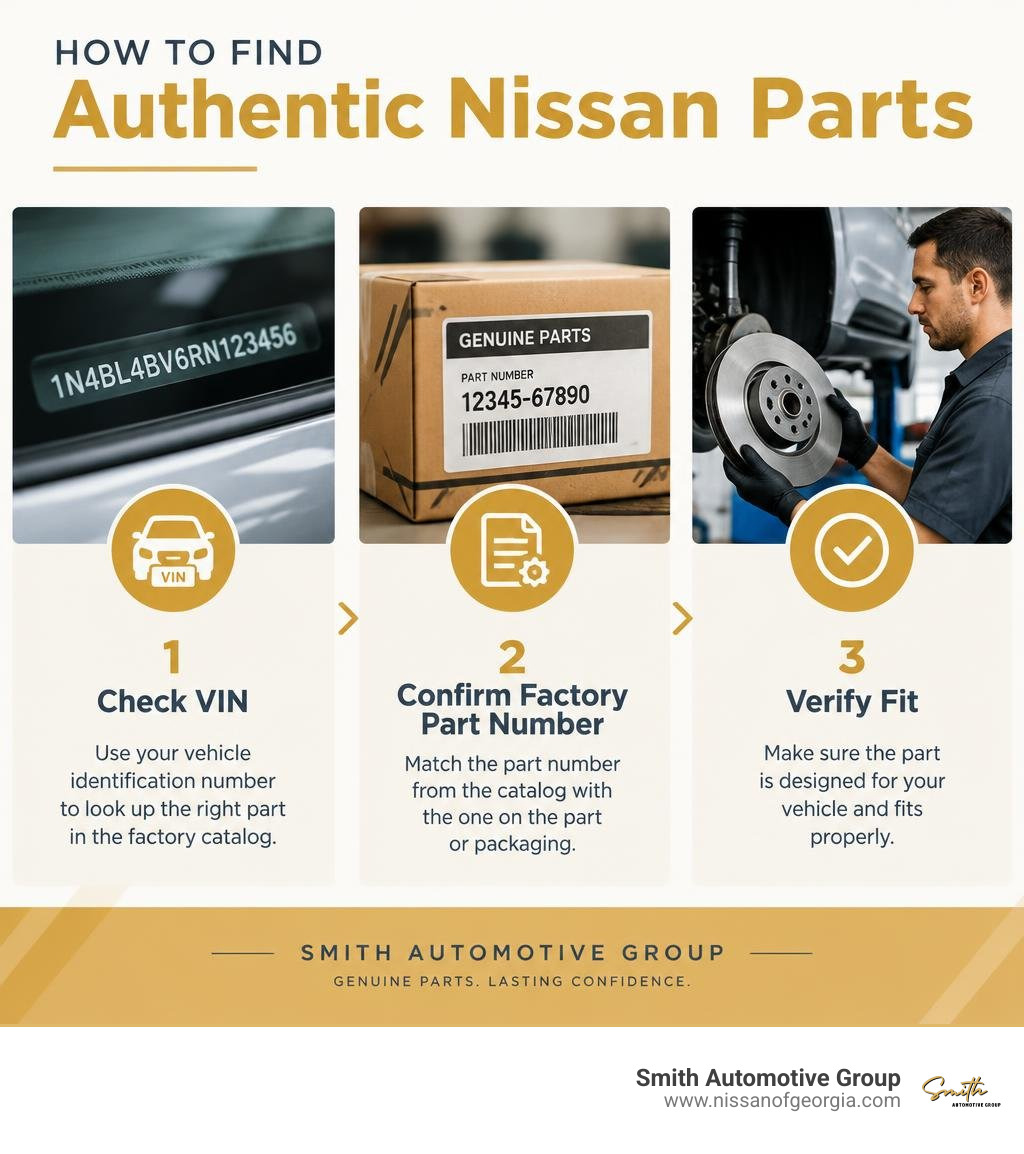
To find authentic Nissan parts, start with your vehicle identification number (VIN). A Nissan parts specialist can use it to check the factory catalog, confirm the correct part number, and help you avoid a part that looks right but does not fit.
Genuine Nissan parts are made to meet Nissan's specifications. That matters most for parts your family relies on every day, from brakes and cooling components to routine maintenance items. This guide explains what goes into OEM engineering and how to choose the right part with confidence.
This information is for informational purposes only. Work should only be completed by an OEM-certified technician. We advise customers to consult our service department and their vehicle owner’s manual before conducting any repairs.
Engineering Standards of Nissan Genuine Parts
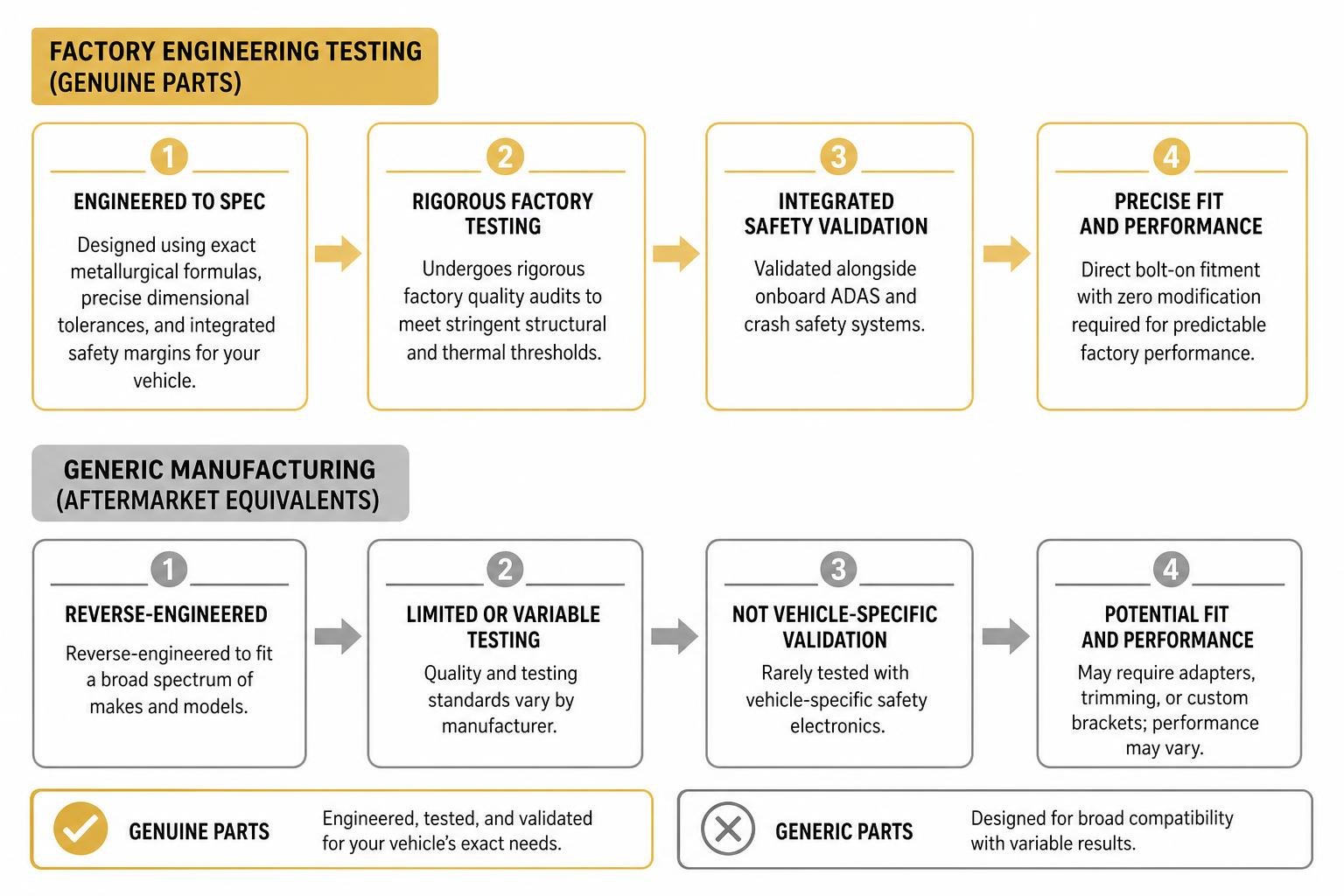
Every vehicle rolling off the assembly line relies on thousands of interconnected components engineered to operate in complete harmony. When engineers develop nissan genuine parts, they design each component using exact metallurgical formulas, precise dimensional tolerances, and integrated safety margins tailored specifically to your vehicle's architecture. Factory engineers conduct exhaustive computational modeling and physical stress simulations long before a component ever reaches production, ensuring that every bolt, bearing, and sensor performs reliably under demanding real-world conditions.
Third-party generic alternatives are frequently reverse-engineered to fit a broad spectrum of makes and models. While a generic part might visually resemble an original component, minute variations in alloy composition, heat treatment, or gasket thickness can introduce subtle points of failure. In contrast, authentic Original Equipment Manufacturer (OEM) parts undergo rigorous factory quality audits to ensure they meet stringent structural and thermal thresholds. These parts are crafted from raw materials tested for fatigue resistance, chemical durability, and exact environmental tolerance. These standards also align with the vehicle safety guidelines published by the National Highway Traffic Safety Administration, which outlines why factory-matched components play a role in overall vehicle safety performance.
| Feature / Standard | Nissan Genuine Parts (OEM) | Generic Aftermarket Equivalents |
|---|---|---|
| Material Composition | High-grade, factory-specified alloys and polymers | Varied baseline materials designed for universal fit |
| Dimensional Tolerances | Exact factory blueprints (micron-level accuracy) | Broad reverse-engineered approximations |
| Safety Integration | Validated alongside onboard ADAS and crash safety systems | Rarely tested with vehicle-specific safety electronics |
| Warranty Protection | Backed by factory-supported parts warranty | Limited third-party or manufacturer-specific warranties |
| Installation Efficiency | Direct bolt-on fitment with zero modification required | May require adapters, trimming, or custom brackets |
How Nissan Genuine Parts Support Factory Performance
Maintaining original factory performance requires components that sustain predictable operating characteristics over tens of thousands of miles. Factory engineering ensures that airflow rates, hydraulic pressures, and electrical resistances align precisely with what your vehicle's engine control module expects. When non-standard hardware is introduced into modern engine and chassis management systems, it can cause electronic communication lag, inaccurate sensor readings, and uneven mechanical wear across surrounding assemblies.
Using authentic components delivers tangible ownership advantages:
- Validated Durability: Factory components undergo cyclic stress tests, environmental chamber simulations, and extreme thermal testing designed to simulate years of harsh driving conditions.
- Calibrated Efficiency: Sensors, fuel delivery modules, and airflow assemblies maintain the exact fuel-trim ratios programmed by factory powertrain engineers, preserving optimal miles per gallon.
- Electronic System Compatibility: Original sensors and actuators communicate seamlessly with onboard Controller Area Network (CAN bus) architectures without generating false trouble codes.
- Retained Vehicle Value: Complete service records reflecting authentic OEM parts usage help preserve vehicle appraisal and resale value over time by proving uninterrupted adherence to factory standards.
Owners who maintain detailed service documentation also benefit when it comes time to trade in or sell their vehicle, since verified records of factory-grade maintenance give buyers and appraisers added confidence in a vehicle's mechanical history.
Sourcing Nissan Genuine Parts for Direct Fitment
Finding the exact replacement requires referencing official factory part numbering. Nissan assigns unique alphanumeric identifiers to every bracket, sensor, harness, and fastener. These numbers track subtle engineering updates, material improvements, and mid-cycle design refinements that generic parts databases often overlook.
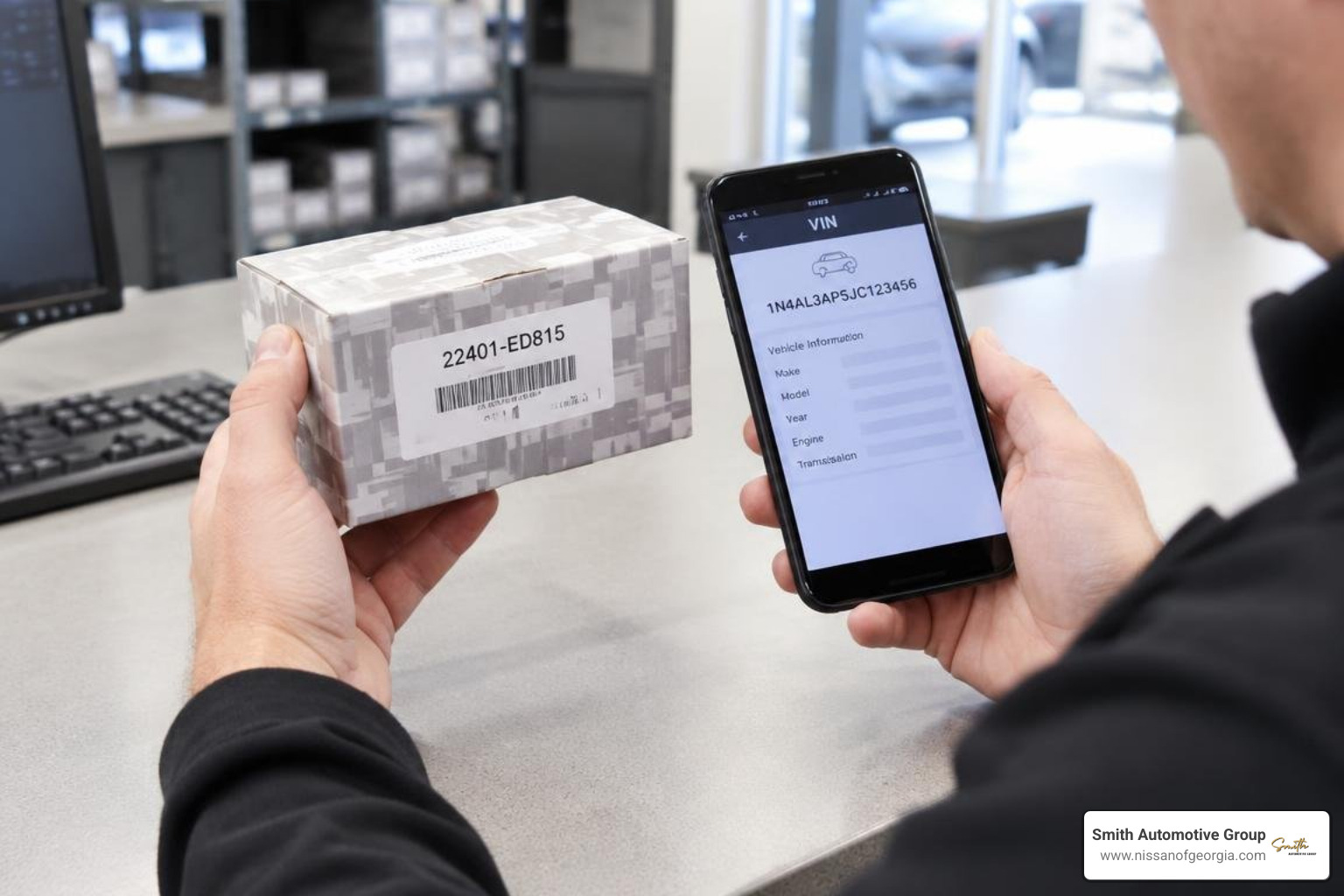
When ordering components, having your vehicle identification number (VIN) ensures that running production changes, trim-level variances, and engine displacement differences are accounted for. Sourcing parts through authorized dealer networks eliminates the risk of counterfeit parts, ensuring you receive authentic hardware backed by Nissan's technical catalog and warranty protections.
Essential Component Categories and Factory Specifications
Modern vehicles rely on intricate networks of mechanical, hydraulic, and digital systems working in total synchronization. Sourcing factory components ensures that replacement hardware interfaces seamlessly with existing onboard computers, safety modules, and mechanical linkages without requiring modifications or compromised alignments.
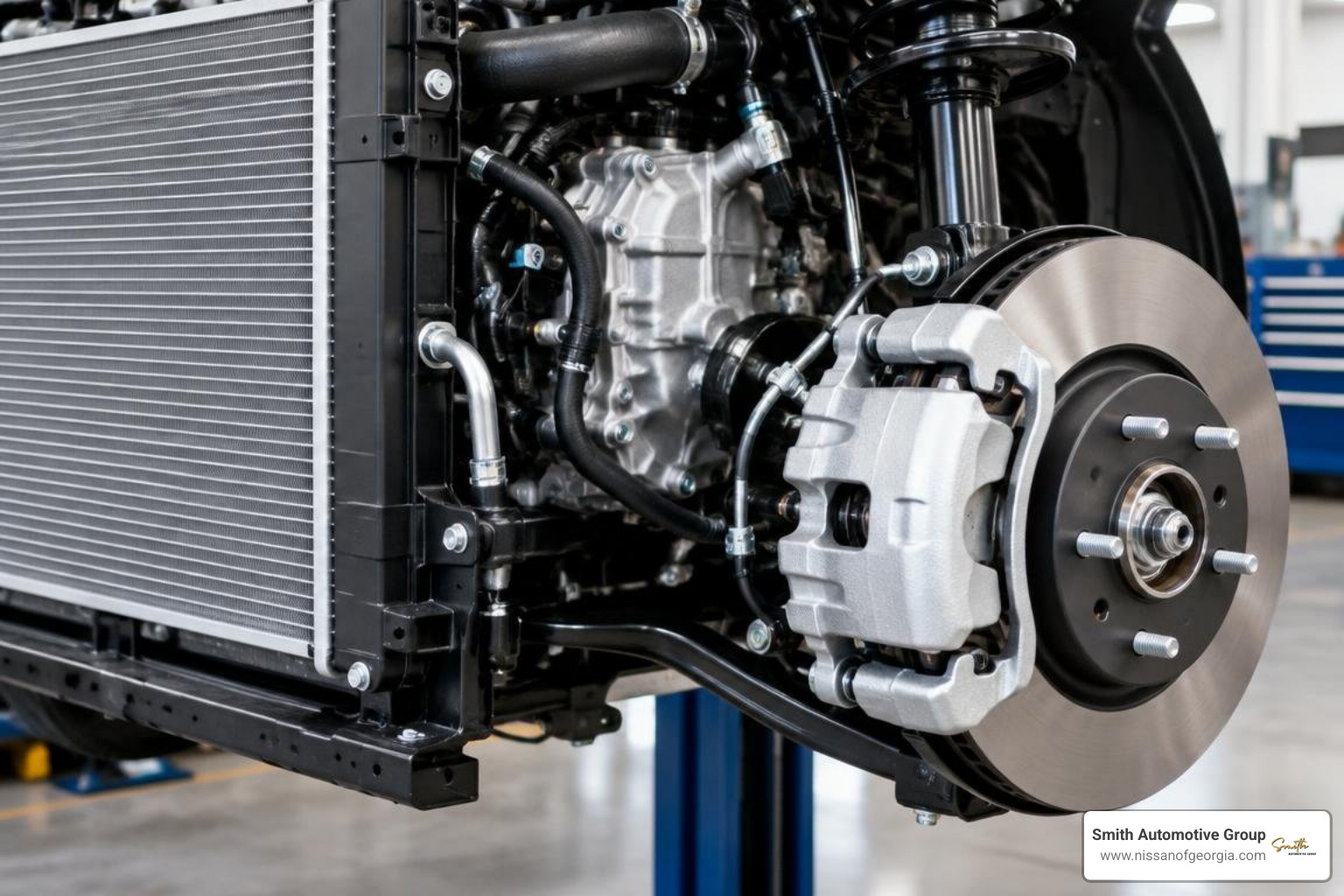
Powertrain and Cooling System Integrity
Your vehicle's powertrain generates immense heat and mechanical energy. Maintaining thermal stability protects critical internal assemblies from premature wear and structural distortion.
- Cooling Radiators & Hoses: OEM cooling assemblies utilize specific fin-density ratios, precision-molded tanks, and chemical-resistant silicone blends designed to handle factory coolant pressure cycles without ballooning, cracking, or degrading over time.
- Oil Coolers & Filtration: Factory oil filter housings and internal bypass valves maintain steady hydraulic flow, preventing oil starvation during cold starts while capturing micro-contaminants that accelerate bearing wear.
- Fuel Delivery & Engine Management: Authentic fuel pumps and Electronic Control Unit (ECU) wiring harnesses ensure stable voltage delivery and exact fuel rail pressure across all engine speeds and operational loads.
- Gaskets and Seals: Multi-layer steel (MLS) head gaskets and factory elastomeric seals provide exact crush characteristics that withstand high combustion chamber pressures and temperature spikes.
Regularly inspecting these systems during scheduled maintenance visits helps catch early signs of wear, such as coolant seepage or inconsistent fuel pressure readings, before they develop into larger mechanical issues that could affect daily reliability.
Braking and Suspension Reliability
Braking and suspension systems carry the greatest responsibility for passenger safety, stability, and control.
- Braking Components: Genuine brake calipers, rotors, and friction pads are matched to work in tandem with factory Anti-lock Braking Systems (ABS) and Vehicle Dynamic Control (VDC). The specific friction formulation prevents excessive rotor grooving, reduces brake fade under heavy load, and maintains predictable pedal response. Using genuine brake fluids ensures proper boiling point resistance and viscosity across wide operating temperature ranges.
- Suspension Geometry: Factory strut mounts, springs, control arms, and sway bar links preserve engineered roll centers, steering feedback, and ride comfort. Maintaining factory damping rates prevents excessive tire wear, preserves tire contact patch consistency, and protects electronic stability sensors from erratic chassis vibrations.
Because braking and suspension parts work together as a connected system, replacing one component with a mismatched generic part can throw off the balance of the entire assembly, leading to uneven wear patterns and reduced handling precision over time. Choosing factory-specified hardware helps keep these systems working as originally engineered.
This information is for informational purposes only. Work should only be completed by an OEM-certified technician. We advise customers to consult our service department and their vehicle owner's manual before conducting any repairs.
Sourcing Specialized Nissan Genuine Parts
Finding specialized components or ordering hardware for specific vehicle configurations requires direct access to factory technical databases. Whether you need specialized powertrain gaskets, electronic sensor harnesses, calibrated suspension links, or structural body hardware, our dealership parts departments provide direct access to verified factory stock and specialized supply channels.
Working directly with certified dealership parts specialists ensures that your order reflects the most recent part supersessions and engineering updates issued by the manufacturer. Factory catalogs are updated continuously to reflect revised component designs, updated fastener torque specifications, and complete installation kits that include all necessary one-time-use seals and clips. By consulting our factory-trained dealership parts advisors, you guarantee that you receive verified parts engineered specifically for your vehicle's exact model, year, and production batch.
Frequently Asked Questions About Nissan Maintenance
What are the main benefits of factory OEM parts?
Factory OEM parts provide exact structural fitment, factory-backed warranty coverage, and guaranteed compatibility with your vehicle's safety and mechanical systems. They eliminate the guesswork of universal aftermarket hardware.
How do factory components support vehicle performance and long-term value?
Because OEM parts match original engineering blueprints, they maintain optimal fuel efficiency, predictable handling, and factory emissions compliance. Complete documentation of factory-grade maintenance also provides buyers with verified proof of proper vehicle care.
Where can owners find verified technical support for authentic part selection?
Authorized dealership parts departments and certified service centers provide direct access to the factory parts catalog. By providing your VIN, certified specialists can identify the exact part numbers, revised supercessions, and required installation hardware for your vehicle.
Conclusion
Every Nissan vehicle is built with precision, and maintaining that level of engineering requires components manufactured to the exact same standard. By choosing factory-certified hardware, you protect your vehicle’s safety systems, maintain its driving dynamics, and ensure dependable daily performance.
At Smith Automotive Group, we take pride in serving our Georgia communities across our three conveniently located dealerships. Whether you are maintaining your current vehicle with genuine factory components, scheduling service with our factory-trained technicians, or looking to explore new Nissan models and factory-backed support, our team is here to provide transparent, neighbor-focused service you can trust.